How to Prevent Truck Gearbox Failure Under Heavy Loads

Time:2026-10-03 Author:Henry
0%

Heavy loads expose every weakness in a truck’s gearbox. A steep haul, frequent stops, and poor shifting can create extreme heat and pressure. Over time, gears, bearings, synchronizers, and seals may wear beyond their safe operating limits. Many fleet technicians see the same warning signs: delayed engagement, grinding sounds, burnt fluid, and metallic particles on the drain plug.

The practical question is, why does truck gearbox fail under heavy load? Usually, the cause is not one dramatic mistake. It is often a combination of overload, incorrect gear selection, low lubricant levels, neglected maintenance, and cooling problems. A driver may hold a high gear on a climb, while the engine struggles and the gearbox absorbs unnecessary stress. That small decision can become an expensive repair.

Reliable prevention starts with evidence. Check the manufacturer’s load ratings, lubricant specification, service intervals, and temperature limits. Inspect fluid condition regularly. Monitor leaks around seals and housings. Use a suitable lower gear before climbing, rather than forcing the transmission to recover late. Keep cooling passages clean, especially in dusty work environments.

No checklist catches everything.

Real-world operation is less predictable than a workshop test. Some failures develop quietly, and even experienced technicians can misjudge early symptoms. For that reason, drivers, service teams, and fleet managers should record unusual noises, shifting changes, payload patterns, and operating temperatures. Careful records support better decisions and may reveal a repeated cause before a gearbox stops under load.
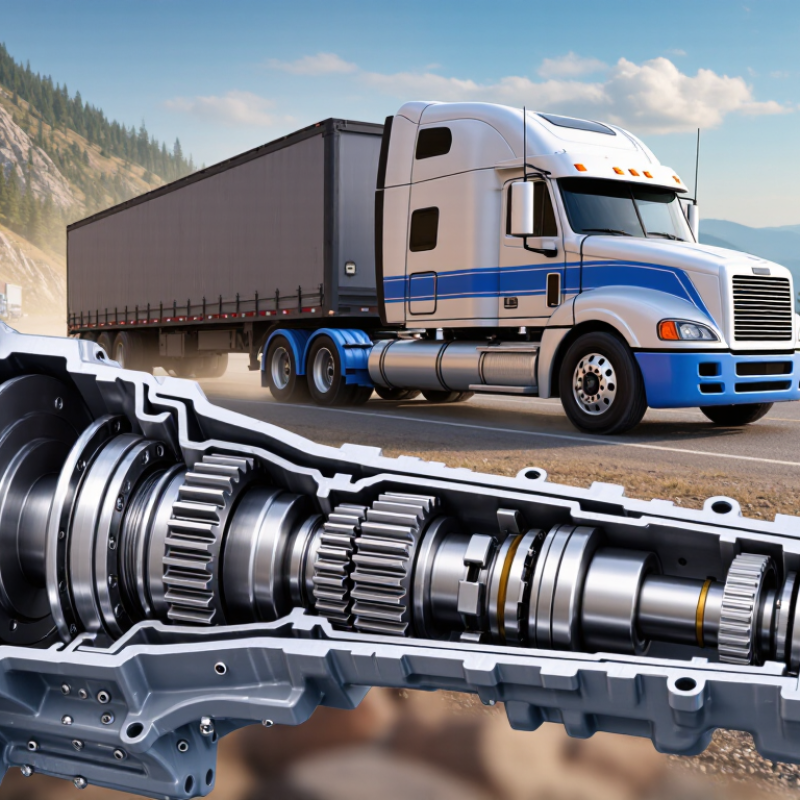
How to Prevent Truck Gearbox Failure Under Heavy Loads

Understanding How Heavy Loads Stress a Truck Gearbox

Heavy loads do not damage a truck gearbox by weight alone. The real danger is repeated torque shock during launches, steep climbs, and rushed gear changes.

A loaded truck may require far more input torque at low speed. That force passes through the clutch, shafts, gears, and bearings. Heat then builds inside the housing, especially when lubrication is low or incorrect.

Workshop inspections often reveal the same pattern: dark oil, rounded gear teeth, and metal dust around magnetic drain plugs.

Small symptoms matter. A delayed shift can create clutch slip, raising temperature before the driver notices. The American Trucking Research Institute reported repair and maintenance costs of approximately 19.8 cents per mile in its 2024 Operational Costs of Trucking report. Gearbox neglect can quietly increase that figure. It is not a perfect measure, because fleets record failures differently.

Drivers should select a lower gear before climbing, not halfway up a grade. Smooth engagement reduces shock loading. Technicians should check oil level, leaks, breather blockage, and shift-linkage alignment during scheduled inspections.

The U.S. Department of Energy’s Transportation Energy Data Book shows freight vehicles consume substantial energy under heavier operating conditions, reflecting greater power demand. That does not predict gearbox failure directly, but it explains why heat management deserves attention. A temperature check after a long climb may reveal trouble earlier than a warning light. Some maintenance intervals also seem too generous for severe-duty routes. Real load cycles should guide them.

Selecting the Correct Gearbox and Load Configuration

Heavy loads rarely destroy a gearbox in one dramatic event. They expose a mismatch between torque, duty cycle, and axle loading. The U.S. Department of Transportation’s Freight Facts and Figures 2023 reports approximately 12.9 billion tons of freight moved by truck in the United States during 2022. That volume makes correct gearbox sizing a reliability issue, not merely a purchasing decision. Select ratios from wheel torque, gross vehicle weight, tire radius, road grade, and expected speed. Do not size from engine horsepower alone.

Measure duty cycles. A truck climbing a quarry ramp creates different stress from highway cruising. Include start-stop frequency, reverse maneuvers, PTO operation, and shift shock. A ten-ton payload positioned close to the rear axle can increase traction, but it may overload that axle and intensify gearbox reactions. The American Trucking Associations’ American Trucking Trends 2023 report states that trucking carried about 72.6% of domestic freight by weight. Real fleets therefore need configurations that survive repeated, imperfect loading, not only laboratory ratings.

Use the gearbox maker’s service factor, then verify the calculation against ISO 6336 gear-load methods and applicable axle limits. Check peak torque during launch, not only continuous torque. Shock loads matter. In field inspections, inspect oil temperature, metal particles, backlash, and mounting-bolt movement after heavy routes. A neat spreadsheet can still be wrong when drivers frequently overload one side or select the wrong low gear. I would record three months of route data before final selection. That delay may feel excessive, but replacing a failed gearbox beside a steep loading ramp costs more than careful measurement.

Applying Safe Driving and Gear-Shifting Practices

Heavy loads punish a truck gearbox during every launch, climb, and downshift. Safe shifting begins before the vehicle moves. Confirm the load is distributed correctly, then select a starting gear that avoids excessive clutch slipping. A high engine speed is not always stronger. It can create heat, shock, and accelerated wear.

Use steady throttle pressure and allow engine speed to match the next gear. Do not force the lever when resistance appears. Pause, disengage smoothly, and reassess. On steep grades, select a lower gear early instead of shifting repeatedly under pressure. The U.S. Federal Motor Carrier Safety Administration’s Large Truck Crash Causation Study attributed 87% of critical crash factors to driver-related decisions. That figure does not prove gearbox failure, but it highlights the influence of driving technique.

Tips

Keep both hands ready during difficult shifts. Watch engine speed, road gradient, and load movement. Avoid resting a hand on the gear lever. It can apply constant pressure to selector parts. Use engine braking before the descent, not halfway through it. Stop safely if grinding, delayed engagement, or burning odors appear.

The American Trucking Research Institute reported maintenance and repair costs of about 19.5 cents per mile in its 2023 operational-cost report. That figure covers more than gearboxes, yet small habits still affect the bill. In practice, even trained drivers occasionally shift too late. That mistake deserves review, not denial. Record the road, load, gear, and engine speed after unusual behavior. These details help technicians identify repeated stress patterns.

Maintaining Lubrication, Cooling, and Gearbox Components

Heavy truck gearboxes rarely fail from one dramatic mistake. More often, heat, dirty oil, and small component wear build quietly. In workshop inspections, technicians often find dark lubricant, metallic particles, or blocked breathers before a complete breakdown. Use the lubricant grade specified by the gearbox manufacturer, and check its level on level ground. Low oil leaves upper gears dry. Excess oil can create churning heat. Both conditions are harmful.

Cooling deserves equal attention under heavy loads. Inspect external coolers, lines, and fittings for dents, leaks, or restricted airflow. A temperature warning should never be ignored, even when shifting still feels normal. Measure operating temperature during loaded work, not only during an empty test drive. Bearings, synchronizers, seals, and gear teeth also need regular inspection. Unusual whining, delayed engagement, or vibration can indicate developing damage. One practical lesson is easy to miss: a clean housing does not prove healthy internals. Oil analysis can reveal wear earlier, but it is not infallible.

Tips: Check oil level weekly during severe service. Replace lubricant at the recommended interval, sooner after contamination or overheating. Clean cooler fins carefully. Record temperature, mileage, load conditions, and observed noise. Stop and investigate persistent symptoms. Guessing saves minutes, sometimes; repairs can consume days.

Inspecting Early Warning Signs and Managing Repairs

Heavy loads often reveal gearbox problems before a complete breakdown. A trained driver should notice changes in sound, shifting, and fluid condition. Listen for whining, grinding, or rhythmic knocks during acceleration and deceleration. Check for delayed engagement or gears that jump out under load. These symptoms need attention.

A hot, sharp odor near the gearbox may indicate slipping components or overheated oil. Inspect beneath the vehicle after parking on clean cardboard. Fresh oil spots, metallic dust, or a loose drain plug deserve immediate investigation. Do not judge oil by color alone; smell, level, and metal particles provide better clues. I once saw a minor seep become a costly repair because inspection was postponed. The warning was small. The decision was not.

Repair management starts with accurate evidence. Record mileage, load weight, operating temperature, symptoms, and the exact gear involved. A short video of unusual noise can help a technician reproduce the fault safely. Before opening the gearbox, confirm external causes such as linkage wear, clutch adjustment, or damaged mounts. Replacing internal parts without this check can waste time and money. Use the service manual, correct lubricant grade, and specified tightening procedures. A qualified repair professional should inspect bearings, synchronizers, gears, shafts, and seals. Ask for measurements, damaged-part photographs, and a written estimate. If the gearbox slips repeatedly, stop heavy operation rather than forcing another shift. My process is not flawless; rushed checks have missed early leaks. That is why I now use a fixed inspection sheet.

How to Prevent Truck Gearbox Failure Under Heavy Loads - Inspecting Early Warning Signs and Managing Repairs
Inspection Area Early Warning Sign Likely Cause Under Heavy Loads Recommended Check Immediate Action Repair Priority Typical Service Window
Gear oil level and condition Low level, darkened oil, burnt odor, metallic particles, or foaming Leakage, overheating, lubricant breakdown, water contamination, or internal wear Check the level on a level surface according to the service procedure. Inspect a drained sample for water, discoloration, and visible debris. Correct the level with the specified lubricant, repair leaks, and investigate contamination before returning the truck to heavy-duty operation. High Same shift to 1 day
Operating temperature Repeated temperature rise, hot housing, or a warning indication during climbing or towing Overloading, insufficient lubrication, restricted cooling, excessive slipping, or incorrect gear selection Compare temperature readings with the vehicle service limit and check airflow, cooler lines, oil level, and load conditions. Reduce load or operating demand, allow controlled cooling, and correct the cooling or lubrication issue before continued high-load use. High Same day
Gear engagement Hard shifting, delayed engagement, gear clash, or a gear that will not stay selected Worn synchronizer components, clutch drag, incorrect linkage adjustment, damaged shift forks, or internal gear wear Verify clutch release, inspect shift linkage and fluid condition, and perform a controlled road test without exceeding the load limit. Stop repeated forced shifts. Adjust external controls if required; remove the gearbox for inspection when internal damage is suspected. High 1–3 days
Noise and vibration Whine, growl, rumble, knocking, or vibration that changes with gear or vehicle speed Worn bearings, damaged gear teeth, incorrect backlash, shaft misalignment, or driveline imbalance Record when the noise occurs, inspect mounting points and driveline angles, and check for metal particles in the lubricant. Limit driving to a safe location if necessary. Avoid heavy loads until bearing, gear, and alignment checks are completed. Critical Immediate assessment; 1–5 days for repair
Oil seals and housing Fresh oil around the input shaft, output shaft, case joint, or drain plug Worn seal, damaged sealing surface, loose fastener, blocked breather, or excessive shaft movement Clean the area, identify the leak source, inspect the breather, and measure shaft play if leakage returns quickly. Repair the leak before the oil level falls below the safe range. Replace damaged seals and renew deformed sealing washers. High Same day to 2 days
Clutch and torque transfer Clutch slip, burning smell, engine speed rising without matching road speed, or difficult release Excessive load, worn friction material, incorrect adjustment, oil contamination, or repeated low-speed abuse Check free play, clutch release travel, engagement point, and evidence of oil contamination. Compare performance under a controlled test. Do not continue towing or hauling at maximum capacity. Repair the clutch system and correct driving practices that create heat. High 1–3 days
Mounts and driveline alignment Driveline shudder, clunks during load changes, cracked mounts, or abnormal universal-joint angles Loose or damaged mounts, frame movement, worn universal joints, or incorrect propeller-shaft alignment Inspect mount fasteners, rubber elements, universal joints, slip joints, and shaft angles with the vehicle safely supported. Replace damaged mounts or driveline parts and torque fasteners to the specified values before road testing. Medium 1–2 days
Magnetic drain plug and filter More ferrous debris than normal or a sudden increase in filter contamination Accelerated bearing, gear, synchronizer, or shaft wear Inspect and document debris at every scheduled service; compare findings with previous service records. Do not simply clean the plug and continue. Perform an internal inspection when debris is excessive or symptoms are present. High 1–5 days for diagnosis
Load and driving practice Frequent operation near maximum gross combination weight, repeated overload alerts, or harsh gear changes Excessive torque, shock loading, high clutch heat, and operation in an unsuitable gear Review payload records, route gradients, towing demands, driver reports, and the applicable vehicle load limits. Keep the vehicle within its rated limits, select a suitable gear before steep grades, and avoid abrupt clutch engagement. Preventive Review weekly and before heavy-haul routes
Post-repair verification Residual noise, leakage, hard shifting, or abnormal temperature after repair Incorrect assembly, insufficient lubricant, unresolved alignment issue, or an unaddressed secondary failure Confirm fluid level, fastener torque, linkage adjustment, leak-free operation, and temperature during a progressive road test. Record the repair findings and stop service if symptoms remain outside normal operating behavior. Medium Before release to full load

FAQS

How should a heavy truck gearbox be sized?

Size it from wheel torque, vehicle weight, tire radius, road grade, and expected speed. Engine horsepower alone is insufficient. Check launch torque, not only continuous torque.

Why does the duty cycle matter?

Quarry climbing, highway cruising, reversing, and frequent stops create different stresses. Record shift shock and power-take-off use. Real routes are rarely perfect.

Can payload position affect gearbox reliability?

Yes. A payload near the rear axle may improve traction but overload the axle. Uneven loading can increase gearbox reactions and shock loads.

How can service-factor calculations be verified?

Use the gearbox maker’s service factor and compare calculations with recognized gear-load methods. Confirm applicable axle limits. A neat spreadsheet can still be wrong.

What lubrication checks are important?

Check oil level weekly during severe service, with the vehicle on level ground. Low oil can leave upper gears dry. Excess oil creates churning heat.

When should gearbox oil be replaced?

Follow the specified interval, but replace it sooner after contamination or overheating. Look for metal particles, unusual smell, and unexpected level changes. Color alone misleads.

How can cooling problems be found early?

Inspect coolers, lines, and fittings for dents, leaks, blocked airflow, or damaged fins. Measure temperature during loaded work. Empty-road testing may hide overheating.

Which warning signs require prompt inspection?

Whining, grinding, rhythmic knocks, delayed engagement, vibration, and gears jumping out need attention. A hot, sharp odor is also concerning. Stop forcing shifts.

What evidence helps diagnose a gearbox problem?

Record mileage, load weight, operating temperature, exact gear, and symptoms. Photograph leaks and record unusual noises safely. My checks are not flawless, so a fixed sheet helps.

What should be checked before opening the gearbox?

Confirm linkage wear, clutch adjustment, loose mounts, drain-plug condition, and external leaks. Internal parts may not be the cause. Ask for measurements and a written estimate.

Conclusion

Preventing truck gearbox failure under heavy loads starts with understanding the stress created by excessive weight, steep roads, frequent stops, and incorrect gear selection. The question “why does truck gearbox fail under heavy load” is often answered by a combination of overheating, excessive torque, poor load distribution, and delayed gear changes. Choosing a gearbox and load configuration that match the truck’s operating conditions is essential for reliable performance.

Safe driving habits also protect the transmission. Drivers should shift smoothly, avoid forcing gears, and use suitable speeds when climbing or descending. Regular maintenance, including checking lubricant quality, cooling performance, seals, bearings, and gear teeth, helps reduce wear and heat buildup. Early signs such as unusual noise, vibration, slipping, difficult shifting, or fluid leaks should be investigated promptly. Timely inspections and professional repairs can prevent minor problems from developing into serious gearbox damage, improving safety, efficiency, and service life.

Henry

Henry

Henry is a dedicated marketing professional with a profound expertise in the company's offerings. With years of experience in the industry, he possesses an impressive understanding of the market dynamics and consumer behaviors that drive success. Henry is committed to sharing his insights through......